
Cloud Computing
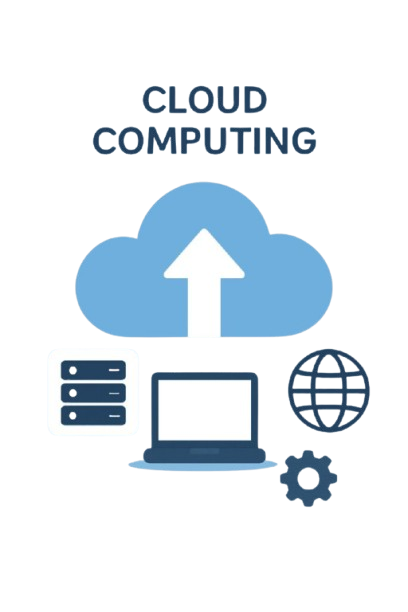
Cloud computing is the delivery of computing services—like storage, servers, software, and databases—over the internet instead of using local devices. It allows users to access data and applications from anywhere at any time. Cloud computing reduces the need for physical hardware and lowers costs. It provides flexibility, scalability, and automatic updates. Overall, it makes technology easier and more efficient for both individuals and businesses
Cloud Computing
Cloud computing is the delivery of computing services—like storage, servers, software, and databases—over the internet instead of using local devices. It allows users to access data and applications from anywhere at any time. Cloud computing reduces the need for physical hardware and lowers costs. It provides flexibility, scalability, and automatic updates. Overall, it makes technology easier and more efficient for both individuals and businesses
course Features
ISO Certification
Course Objective
Full Stack Development refers to the ability to design and build both the front end (client side) and the back end (server side) of web applications.A Full Stack Developer is someone who can work across all layers of a web application from user interfaces to databases and servers.
Course content
• Classic Data Center
• Virtualization
• Cloud and Cloud Computing
• Cloud Computing Service Models
• Cloud Computing Deployment Models
• Service Comparison: AWS, Azure, and GCP
• Amazon Web Services (AWS) and its Benefits
• AWS Global Infrastructure
• AWS Regions and Replication of data between the Regions
• Availability Zones and High Availability
• AWS Edge Location
• Different Amazon Web Services
• Ways to access AWS: CLI, Console, and SDKs
• User management through Identity Access Management (IAM)
• Various access policies across
• AWS Services Security Token Services
• AWS Resource Access Manager (RAM),
• AWS Single Sign-On (SSO)
• AWS Cognito
• AWS Security & Encryption: KMS, CloudHSM, Shield, WAF, Guard Duty
• API keys service access
• Best practices for IAM
• Access billing and create alerts on billing
• Traditional Storage
• Need to Move to Cloud Storage
• Traditional vs. Cloud Storage Cost Cloud Storage
• Different Storage Options Available on AWS
• Simple Storage Service (S3) and Its Components
• Working of S3
• Difference Between S3, EBS and EFS
• Bucket Policy Access Control List(ACL)
• Versioning
• Cross-Region Replication (CRR) and Its Use Case
• Amazon S3 Transfer Acceleration
• Choice of Storage Classes on S3
• Lifecycle Policy of S3 Bucket
• CDN: CloudFront and AWS Global Accelerator
• Storage Gateways
• Virtualization
• Amazon Elastic Compute Cloud (EC2) and Its Benefits
• Amazon Machine Image (AMI)
• Security Groups in AWS
• Authentication through Key-pair
• Hardware Tenancy – Shared vs. Dedicated
• Networking Layer in EC2: VPC
• Elastic Network Interface (ENI) and Its Attributes
• Different Categories of IP Address
• Public IP vs. Elastic IP
• Instance Store
• Elastic Block Store (EBS), Its Features and Volume Types
• Solid State Drive: General Purpose SSD and Provisioned IOPS
• Hard Disk Drive: Throughput Optimized HDD and Cold HDD
• Snapshots Elastic File System (EFS) and Its Features
• EBS vs. EFS
• Amazon FSx: Windows File Server and Lustre
• Amazon RDS and its benefits
• Read Replica RDS
• IAM Authentication
• DynamoDB
• ElastiCache: Working, Redis vs Memcached
• Amazon RedShift
• Kinesis: AWS Kinesis Data Streams, AWS Kinesis Data Firehouse
• AWS Lake Formation
• AWS Athena
• AWS QLDB
• Elastic Load Balancer and its types
• Advanced features of ELB
• Launch Templates
• Launch Configurations
• Comparison of Classic, Network and Application Load Balancer
• Auto-Scaling
• Components of Auto-Scaling
• Lifecycle of Auto-Scaling
• Auto-Scaling policy
• Working of Route 53
• Various Routing Policies
• VPC – Benefits and Components
• CIDR Notations
• Network Access Control List v/s Security Groups
• NAT (Network Address Translation): NAT Devices, NAT Gateway and NAT instance
• VPC peering | Direct Connect | Private Link
• AWS CloudWatch | AWS CloudTrail | AWS Config | Trusted Advisor
• AWS Simple Email Service (SES)
• Implement SES
• Demonstrate the working of SNS SQS: Work with SQS, ASG with SQS
• Amazon MQ
• Amazon Event Bridge
• AWS Simple Notification Service (SNS)
• AWS Simple Work Flow (SWF)
• AWS Lambda AWS Serverless Application Model
• Infrastructure as Code
• CloudFormation and its components
• Templates in CloudFormation
• Stack in CloudFormation
• Resource deletion policies in CloudFormation
• Introduction to AWS OpsWorks
• AWS OpsWorks services
• Components of AWS OpsWorks Stack OpsWorks
• Lifecycle Events and Deployment Commands OpsWorks for Chef Automate AWS
OpsWorks for Puppet Enterprise Auto Healing
• Elastic Beanstalk
• Components of Elastic Beanstalk Beanstalk v/s OpsWorks v/s CloudFormation
• Why Cloud Migration
• What is Cloud Migration
• Migration Phases CAF Perspectives and their Roles
• AWS Migration Hub and ways to use
• AWS Migration Hub Roles and Permissions for AWS Migration Hub
• AWS Migration Hub use cases
• AWS Application Discovery Service Application Discovery Tools
• Application Migration to AWS Application Migration Phases
• Virtual Machines migration ways A
• WS Server Migration Service(SMS) and its working
• Database Migration Implementation steps
• Working of DMS AWS Database Migration use cases Types of data transfer:
Homogenous and Heterogenous
• Database Schema Migration tool
• Database Migration best practices
• What is CDN?
• Introduction to Cloud Front
• Why Cloud Front?
• Setting Cloud Front
• Edge Locations/ End Points
• Origin
• Distribution
• TTL
• AWS Pricing Models (On-Demand, Reserved, Spot Instances)
• AWS Free Tier
• AWS Pricing Calculator, AWS Budgets, Cost Explorer
• Cost Optimization Practices